Friends of Dacha take tour through the wetland. 2010
My friend Matt interviewed me about The Dacha Project for Sociotree.com, an art+culture project focused on the free sharing of everything worth sharing. This was a long overdue and much-needed reason to explore my thoughts through writing, as I answered the questions we six are often asked in conversation. This interview is helping me realize what book I want to write. Thanks Sociotree!
After mulling for weeks about how to finish the ceiling on our straw bale cottage , we still couldn’t decide what to do. Should we go with drywall, the (cheap) material of choice for nearly everything built these days? Or tongue and groove wood, which would definitely look amazing, but would cost at least 4-5 times more.
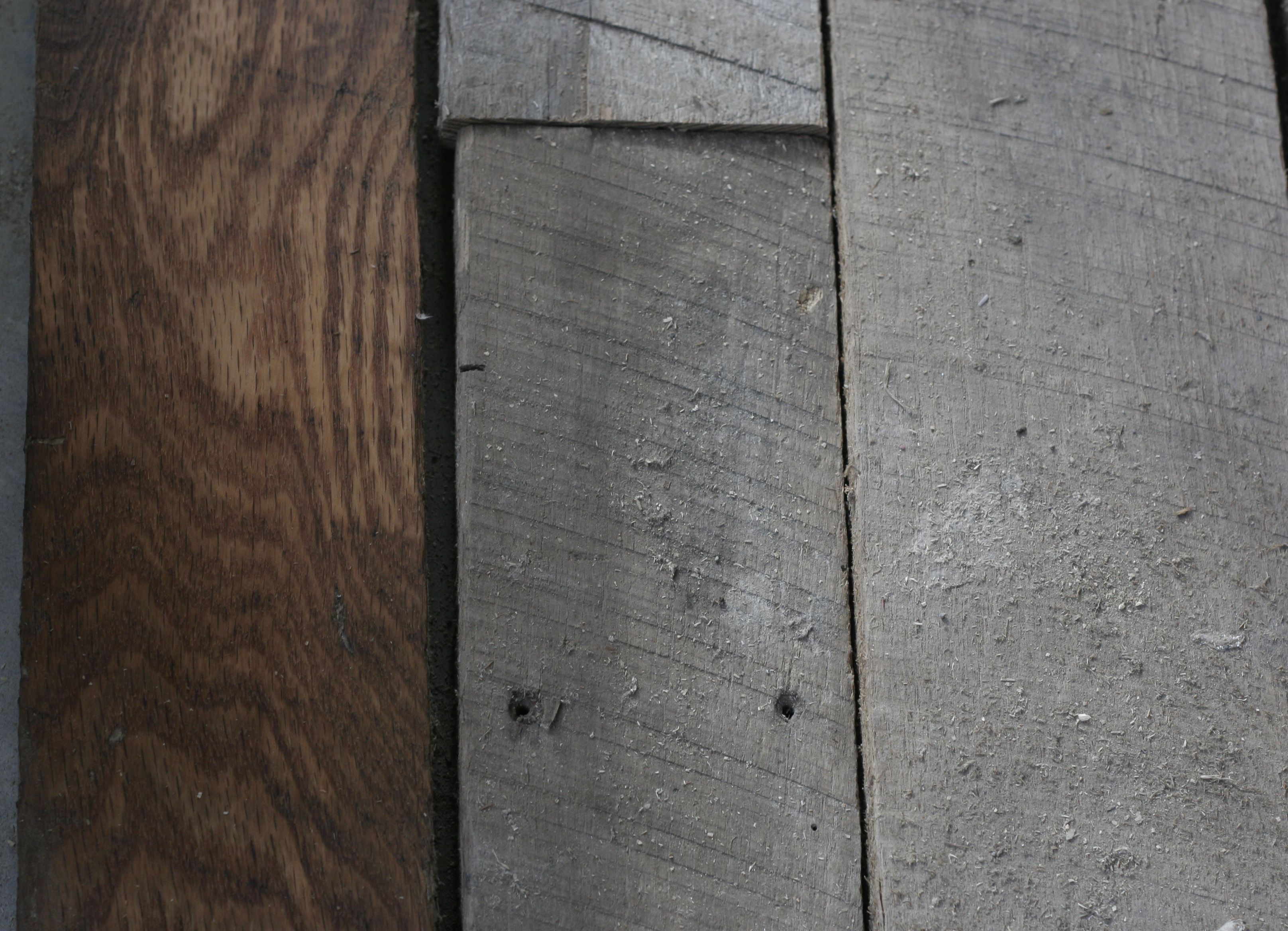
As we wrestled back and forth, an opportunity fell into our lap. While hunting for a bathroom vanity at the Finger Lakes Reuse Center, we noticed that they had reclaimed barn boards for sale at a very reasonable price. Before long, we were driving back to the Dacha with a truckload of miscellaneous planks, most of them oak from 60-80 years ago. The boards were a dull gray on the outside, with a thick layer of dust and the occasional worm hole. They looked dingy, about what you’d expect for a plank that’s been in use inside a barn for the larger part of a century. You could still see deep saw marks from now-antiquated milling equipment.
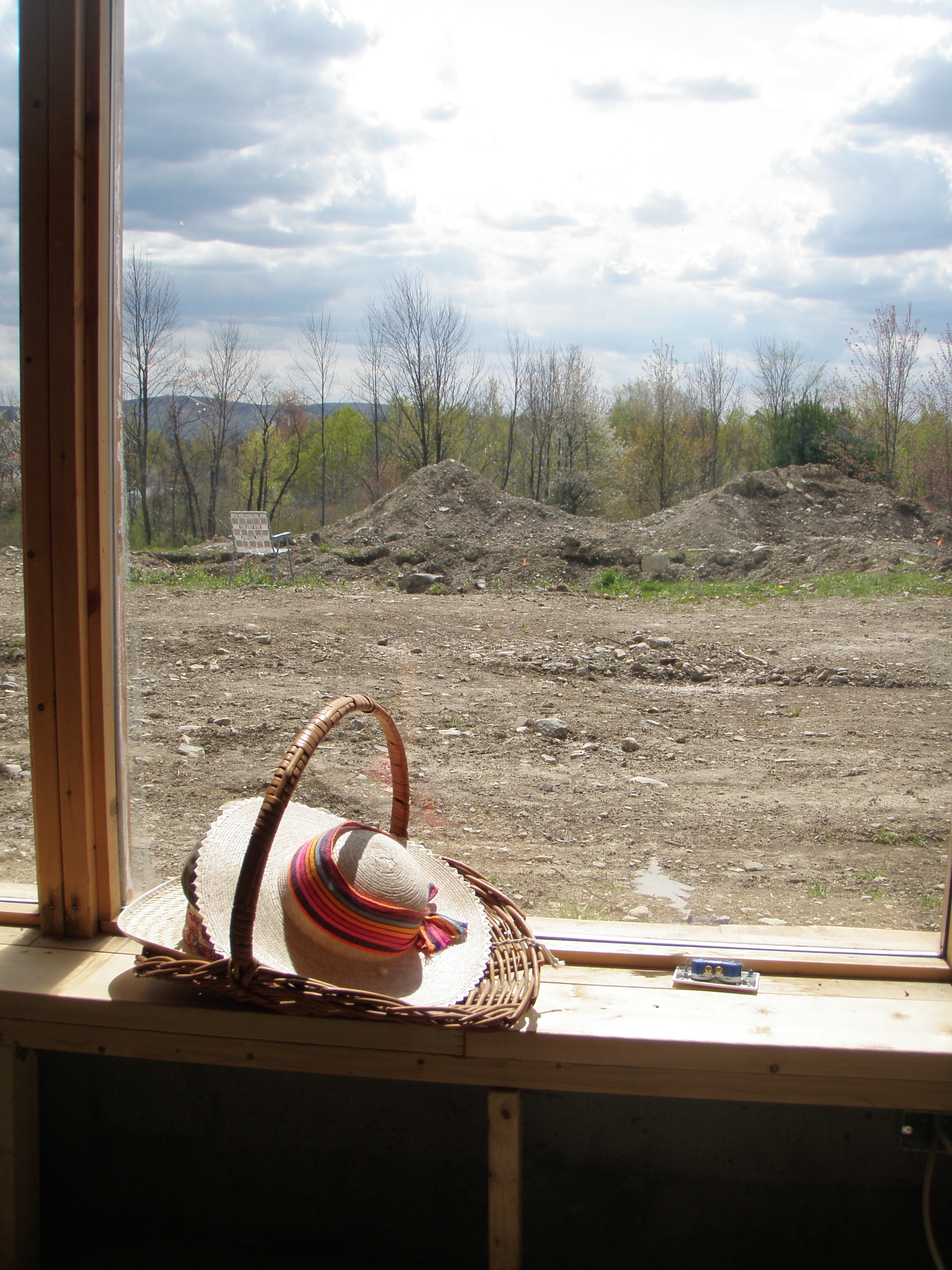
So here we are again. The summer is giving in to the spring and we are finding ourselves with some sunshine on our backs and tools in our belts. We can shed the insulated jumpers and slip into something a little bit more comfortable like a straw hat.
On the sill
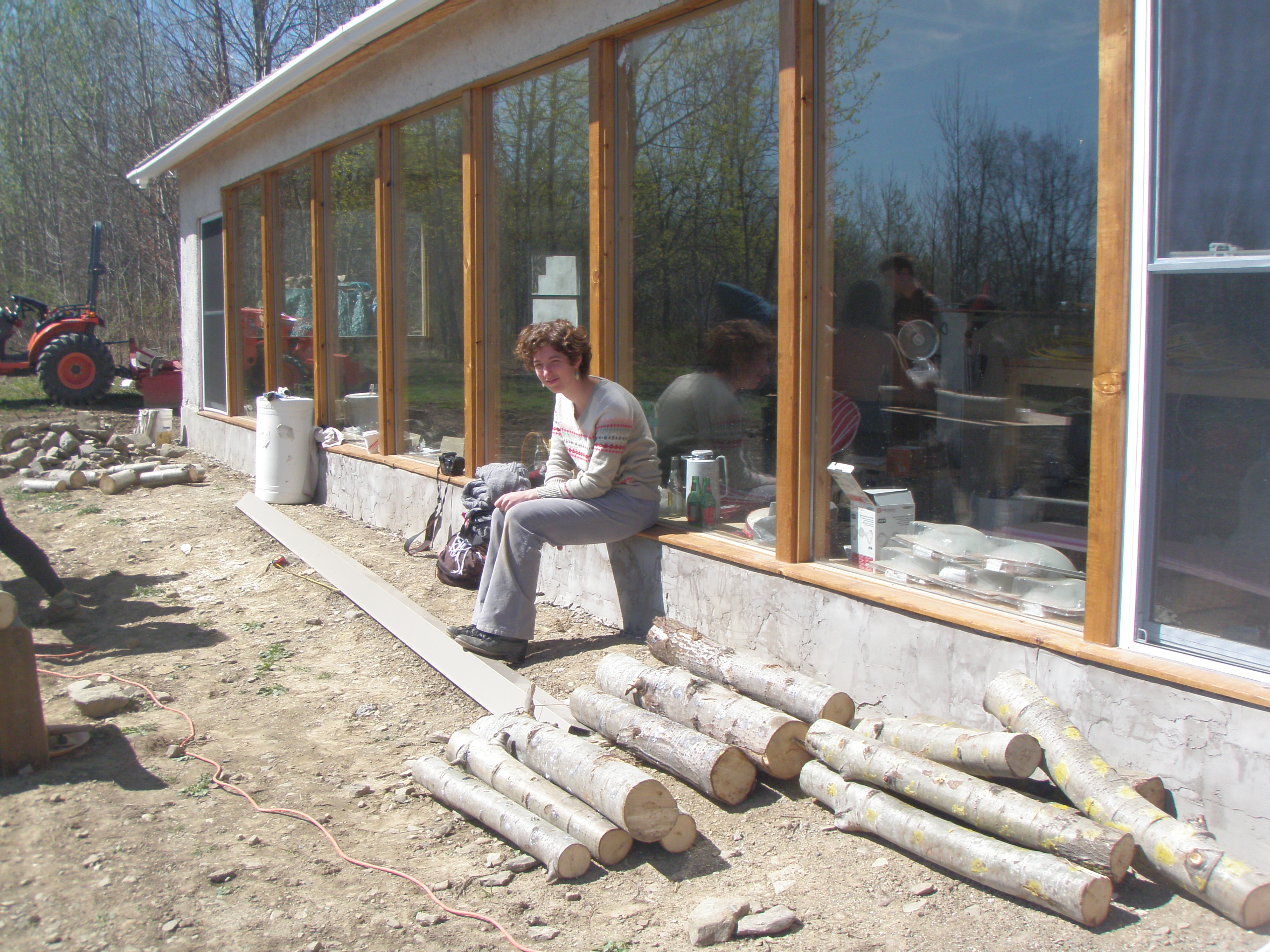
We can take breaks outside.
Tori sitting amongst the infused mushroom logs
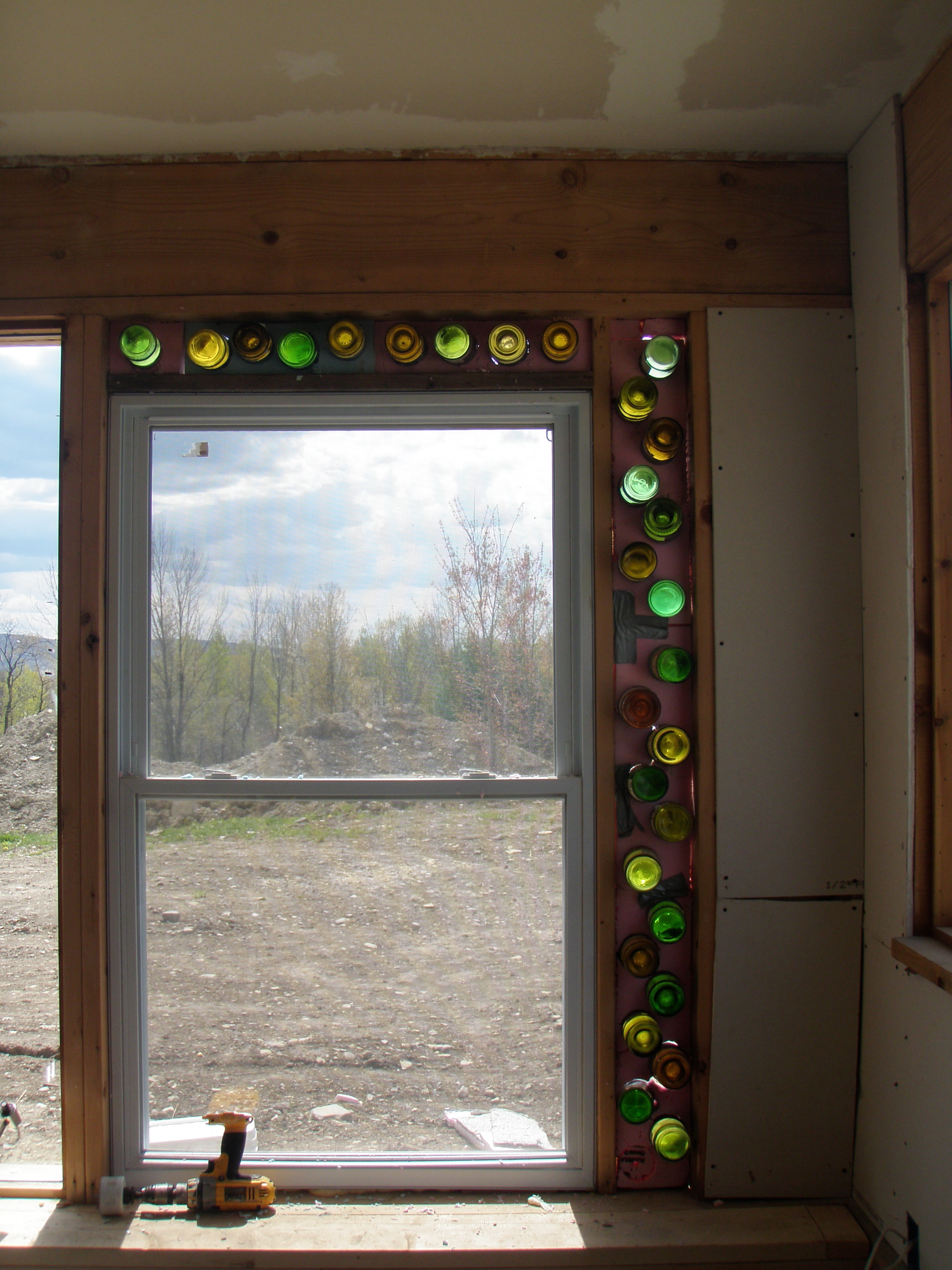
On one of these sunny days, our glass wine bottles cast a decorative light around the “sunflower window.”
Sunflower Window
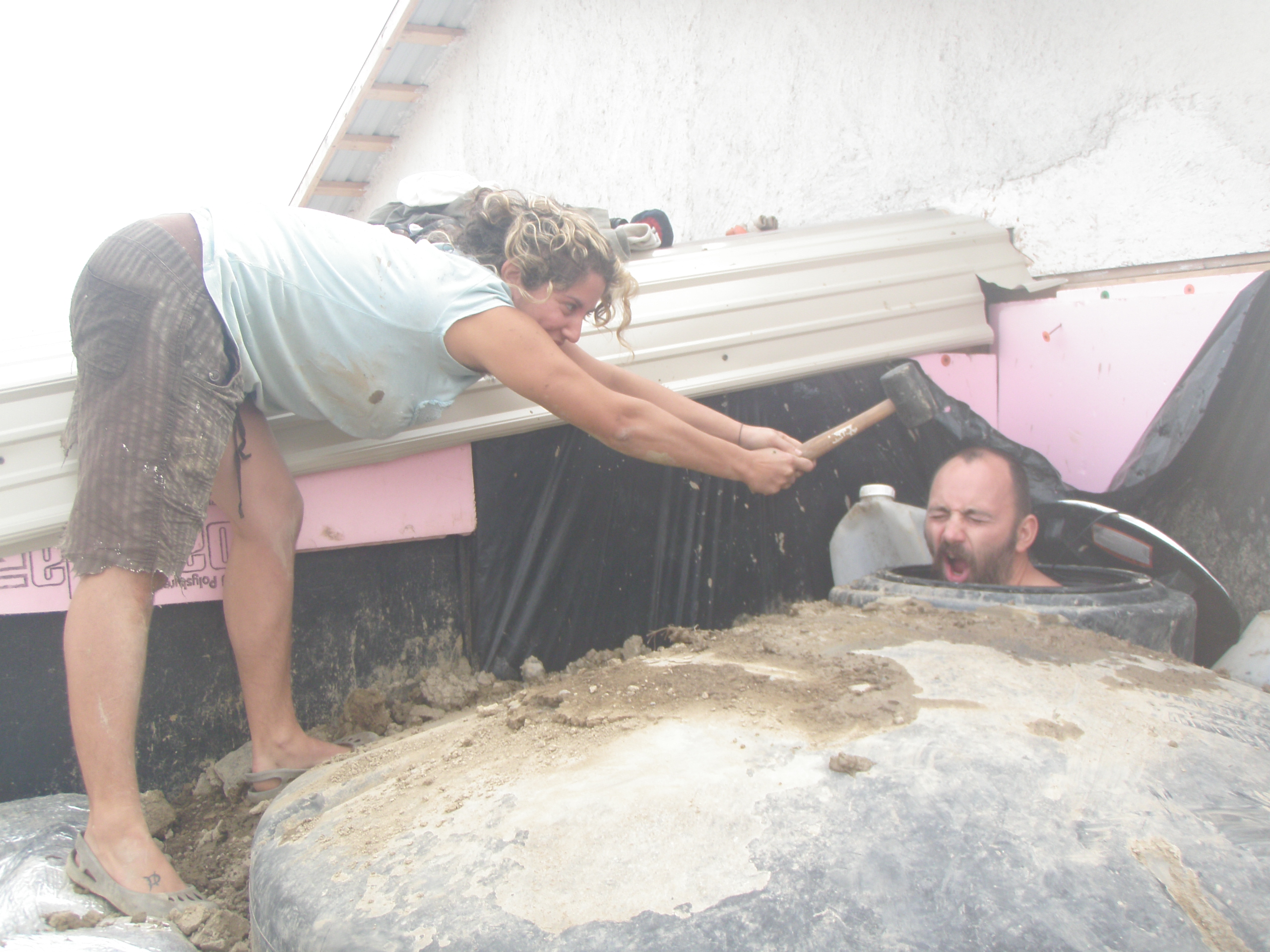
Sometimes we get down to business and play wack-a-mole.
Wack-a-mole
But seriously, the dacha crew whistles while it works and is taking advantage of this weather to prepare for another productive season.
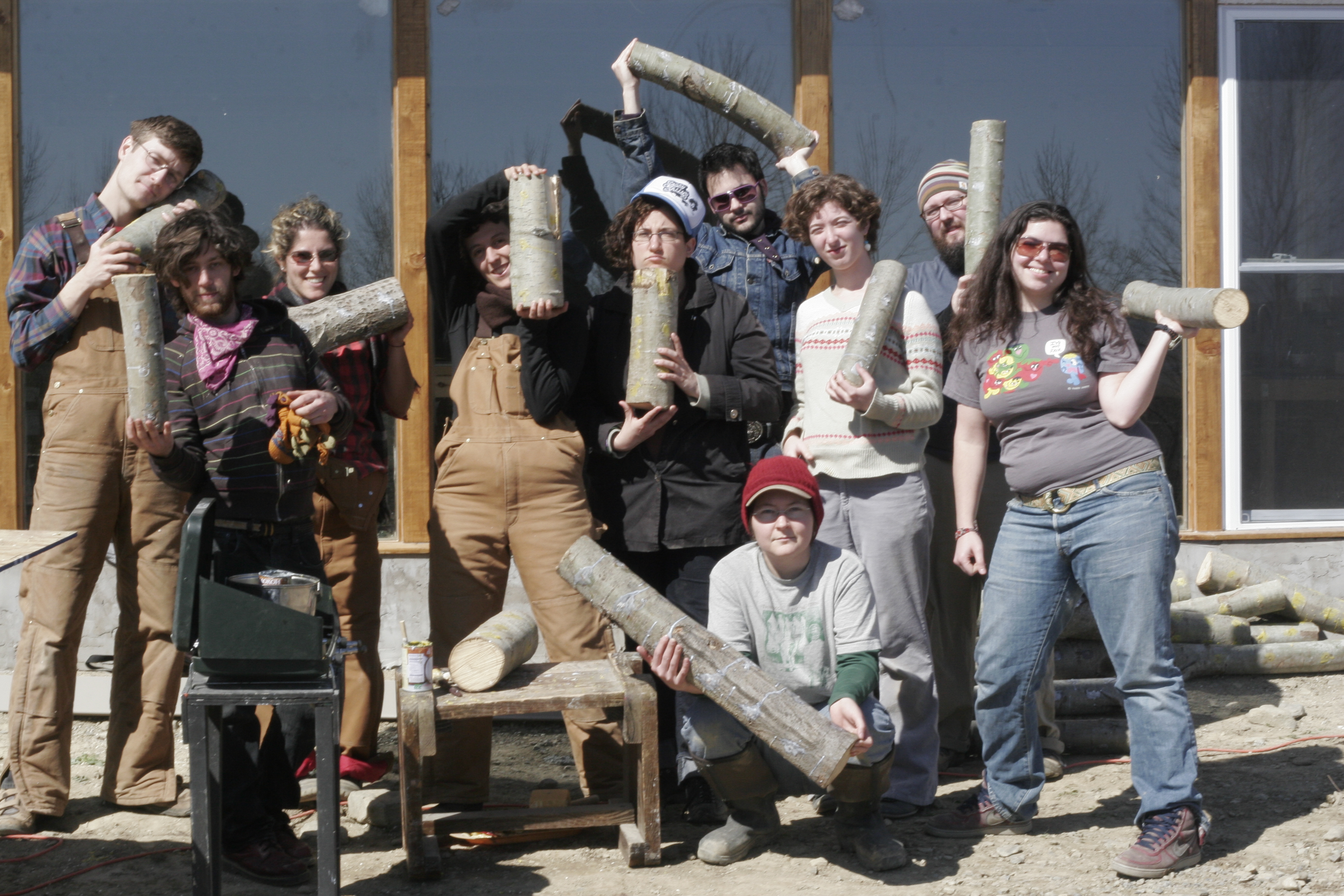
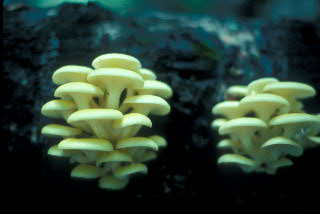
On April 10th the Dacha hosted it’s very first workshop led by Danila on inoculating logs with oyster mushrooms! The event proved what a group of 15-20 novice naturalists can accomplish with a little knowledge, 750 spore infested dowels, and several drill guns. Although many of the attendees were new to mushroom growing, almost thirty logs were successfully inoculated.
To maximize efficiency (and to let everyone try their hand at each aspect of the process) the students formed a loose assembly line: drilling holes on all sides of each log (the hardcore part), whack-a-moling the dowels into the holes (the fun, anger management, part), and painting the holes with wax to keep them moist (the messy part).
To witness this feet of fungal mastery, check out the little wooded patch at the dacha, where the logs are casually leaning in a patch of dappled sunlight preparing to pop little white oyster heads.
-Torikins
Striking a pose with your inoculated mushroom log is said to encourage mycelium growth.
The Dacha Project is in Checkhov’s Dogs, a very special documentary (in progress) about Russians, Mushrooms and the Diaspora!
Katya Gorker, a Russian-American filmmaker from Philadelphia is “tracing the cultural tradition of Mushroom foraging in Russia and the diaspora.” (all music by Animal Hospital).
While far from completion, with a trip to Russia still on the horizon, Katyachka has put together a short excerpt from the footage shot at the Dacha Project and somewhere else in NY (a place clearly special as far as the footage tells us).
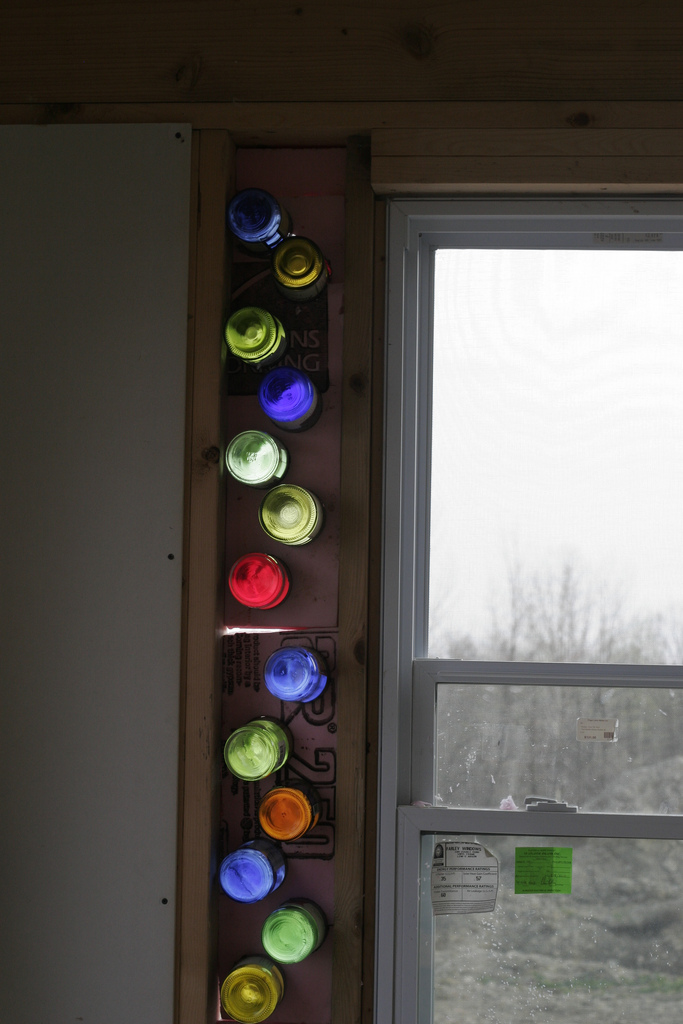
Visitors beware when you step inside the Dacha Haus you’ll see colors and glowing orbs. While not quite the illumination of the divine, all hail the awesome sun as it catches the diffused color of all-dry-now wine bottles.
Yes, after seeing many pictures on homestead blogs and in straw bale building books, we have joined a movement of people using recycled wine bottle as passive energy light fixtures.
We’re just at the beginning stages of this, but these photos are cool! For more visit my flickr Dacha Project set.
-LSF
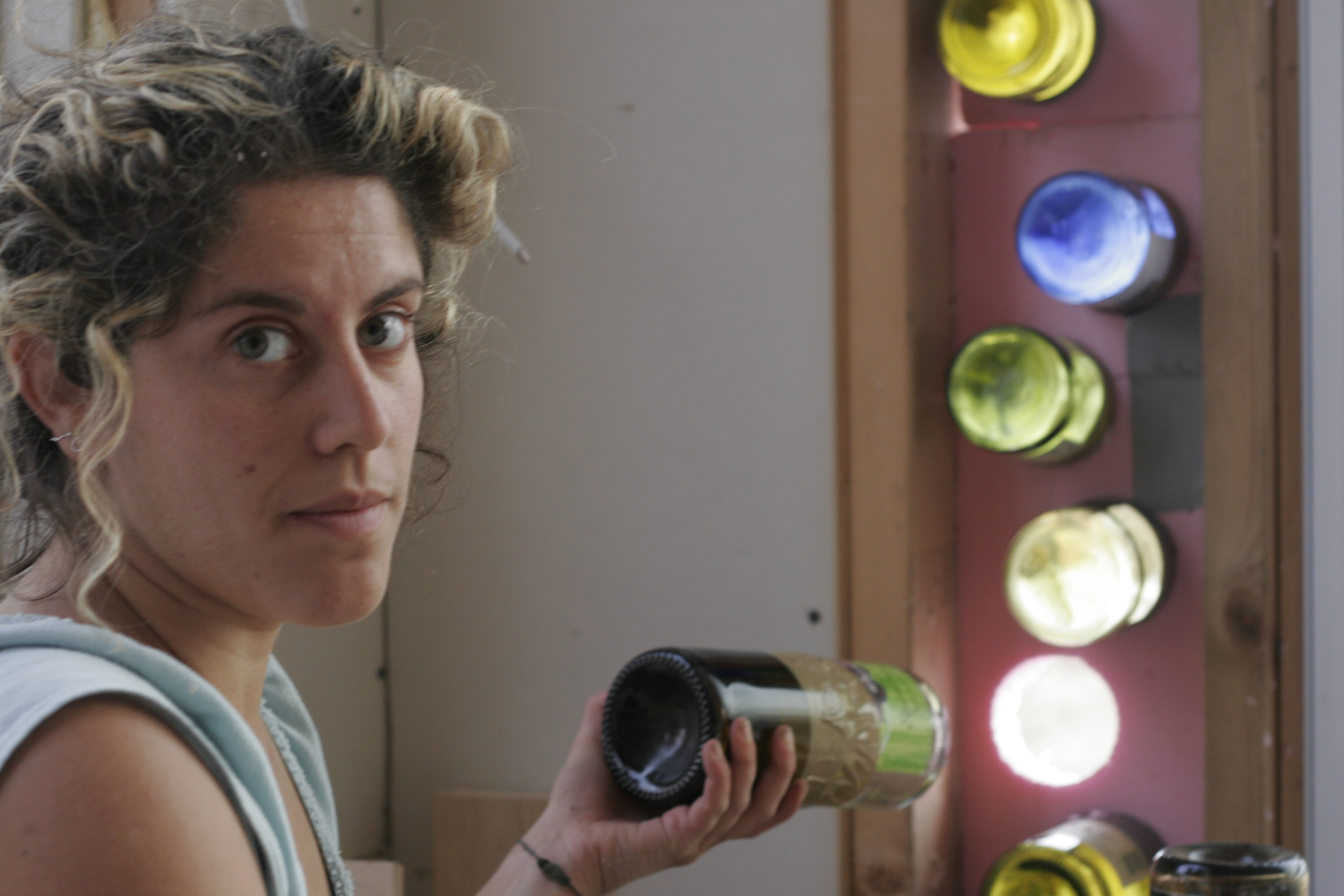
Marina plugs up wine bottle-sized holes in the oh-no-zone layer (our insulation) with wine bottles.
Wine bottles! Cut in half, with the bottoms of each bottle tuct taped together and fitted into a wall.
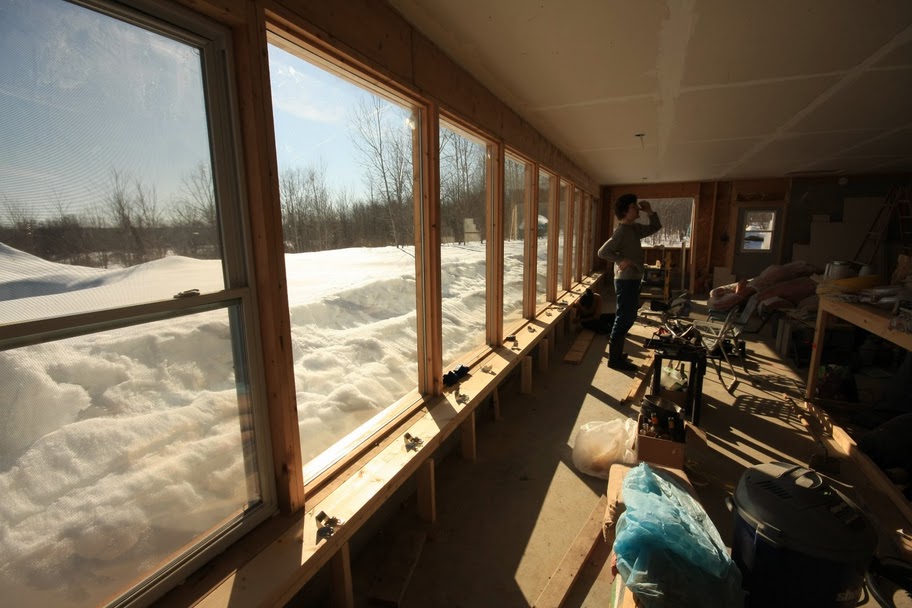
Before we forget how awesome the Dacha Haus Part One preformed in Winter ’10 here are a couple of photos of February. They are also to remind this summer’s building crew that as we build Dacha Haus Part Deux a winter in the Southern Tier is no joke, but that we got it on lock down!
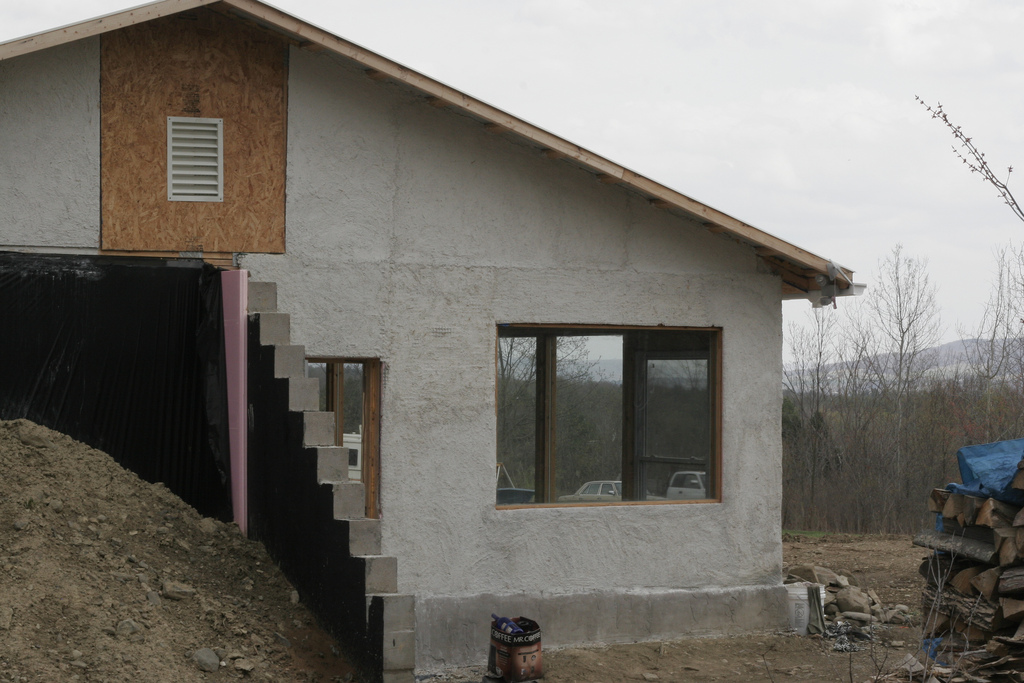
The key to solar passive is full frontage windows facing the south. They are placed at such a height that the house gets direct sunlight in the winter and indirect sunlight in the summer. This technique works around the sun's busy but well-established and much preferred primordial travel schedule- that is low in the sky during winter and high as a pie in the summer. The placement and size of the windows optimizes for maximum comfort, while minimizing energy use.
Danila and I are in shock that the Common House is so warm (see below) when outside it is like 18 degrees F! The snowbank behind us is caused by snowmagedden falling off the hell roof and onto the front field. I'm just back from Mexico, and feeling like this is warm enuf but where's the coconut tree?
Join us for a hands-on workshop this Saturday, April 10th, as we learn about mushroom cultivation on logs. We will be inoculating poplar logs with oyster mushroom spawn, using a method that is sort of like a game of Whack-a-mole.
We’re certainly not experts (yet), but we’ve been wanting to try this for a while, and it should be a fun learning experience. All the necessary tools and materials will be provided.
This workshop is free! If you want to take an inoculated log home with you, there’s a suggested donation of $5-10 to cover material costs.
The event is expected to run from 1-4pm on Saturday, April 10th, 2010. To RSVP or get directions, email Danila - dapasov (at) gmail (dot) com.
We purchased some old for-cheap barn boards from the Fingerlakes Reuse Center to throw up as the ceiling of the straw bale cottage we built. Check out what some sanding and polyurethane and/or linseed oiling can do to a board. Will post photos of completed ceiling when that happens.